 Mailtonic
SPF: stay under the ten-lookup limit, whatever your providers do
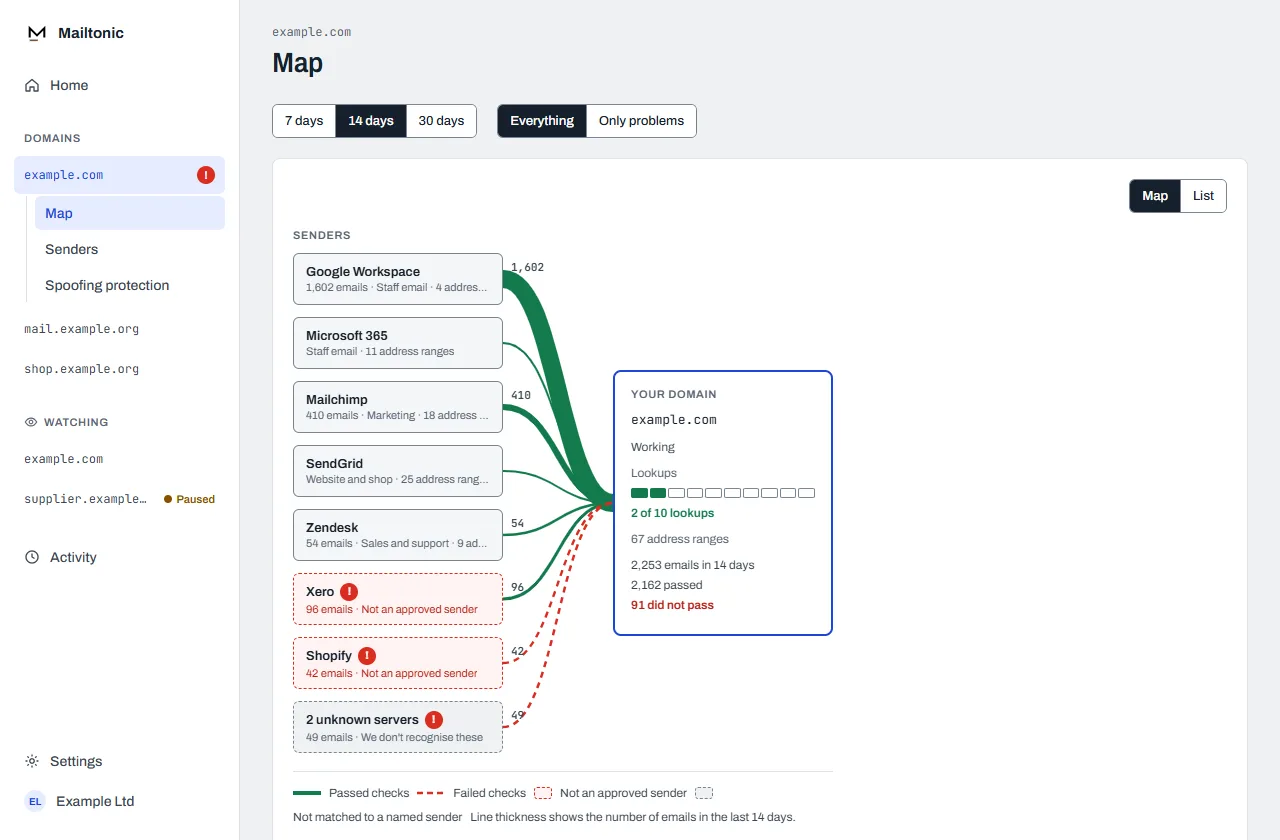
Mailtonic replaces the list of services in your SPF record with a single entry, and keeps it up to date as Microsoft, Google, SendGrid and the rest change their servers.
Six common services. Eleven lookups.
SPF allows only ten lookups, and every email service you add uses some of them. Go one over and SPF fails for all your email, not just the newest service.
One entry, kept current for you
You change your SPF record once. From then on, Mailtonic keeps one up-to-date list of the servers your services send from, so your record stays under the limit.
When a provider changes its servers, we update your record, usually within 15 minutes. If a provider’s record breaks, your last working version stays live.
# before: 11 lookups
v=spf1 include:spf.protection.outlook.com include:sendgrid.net include:mailgun.org include:mail.zendesk.com include:servers.mcsv.net include:amazonses.com -all

# after: one include, maintained by Mailtonic
v=spf1 include:p-3f9c2a7e1b04d85c6a91e2f0.mailtonic.app -all
Spoofing protection (DMARC)
SPF lists which servers may send email as your domain. DMARC tells mailbox providers what to do with email that fails those checks, and asks them to send daily reports of who is sending as your domain.
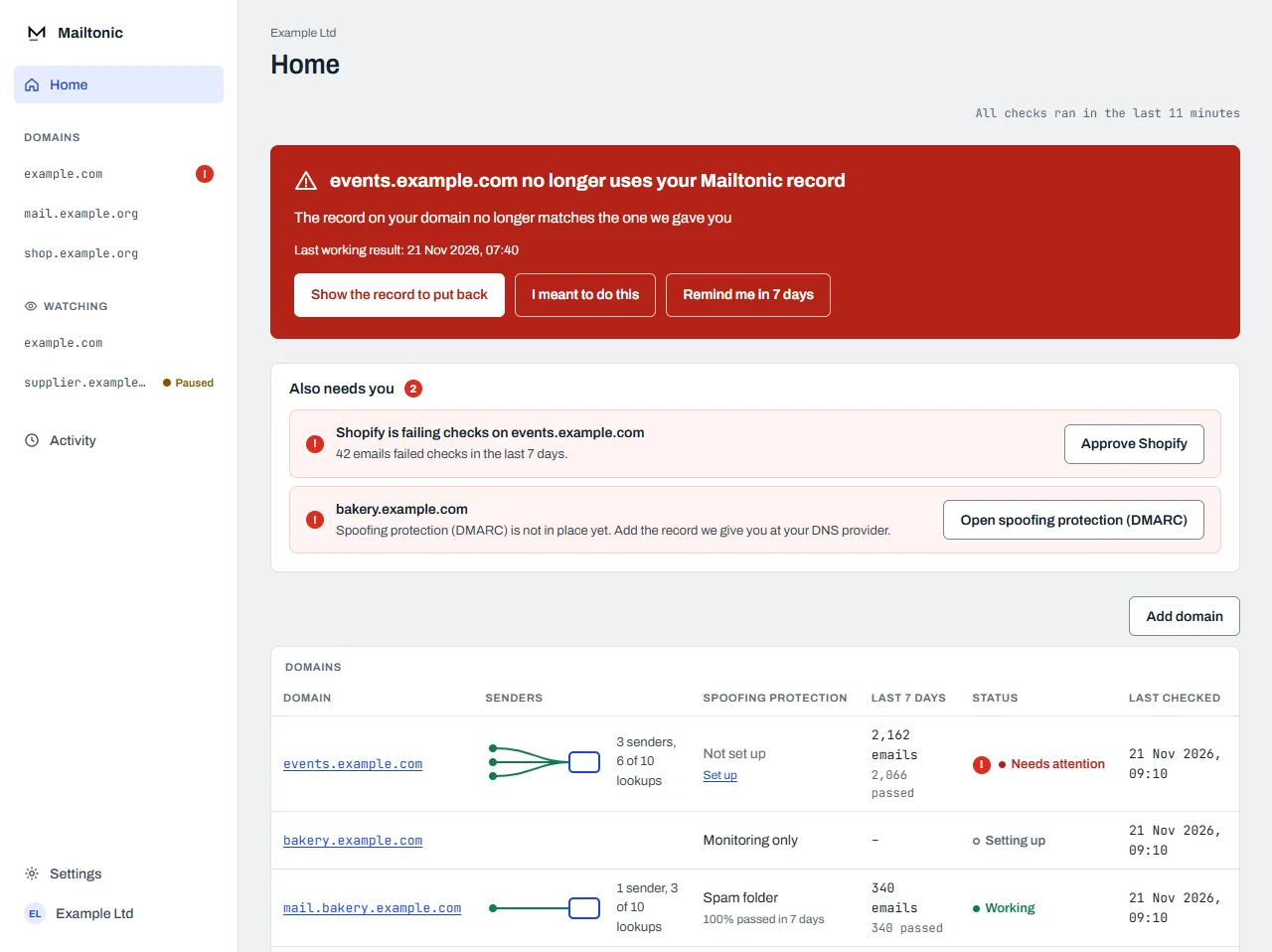
Mailtonic can host your DMARC record, so you make one change at your DNS provider and never edit it there again. We read the daily reports and list who sends email as your domain, and whether each sender passes.
You choose how strict to be: monitoring only, spam folder trial, spam folder, then block. You move one step at a time, Mailtonic never changes the level for you, and you can go back to a less strict level whenever you like.
Spoofing protection (DMARC) is included in both plans at no extra cost. How spoofing protection works
Why Mailtonic
You could copy the addresses into your record yourself. Here is what that leaves you to handle.
| Situation | Copied by hand | Mailtonic |
|---|---|---|
| A provider changes its addresses | Mail from the new addresses fails SPF until someone notices | New version published, aiming for within 15 minutes |
| A provider’s record breaks or goes over the limit | You may not find out | Last working version stays live, and we name the service |
| A provider’s record would let any server send as you | Copied in without anyone noticing | Refused before it’s published |
| Someone edits the record | No history | Every version kept, and owners emailed when a person makes a change |
Every version is on record. Each one shows what changed, the exact record we published, and when it went live.
And it costs less. Some of the SPF flattening services we looked at start at about $37 a month for one domain. Mailtonic is £5, about $7 or €6.